A Walk with a Purpose: How Dunbar’s Everyday Groups Become Health Support
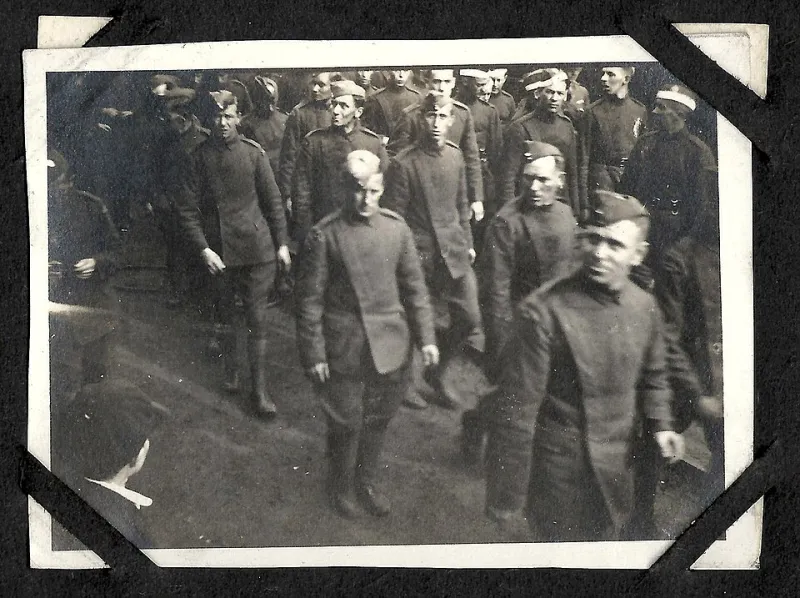
Photo: Deseronto Archives, No restrictions, via Wikimedia Commons
The consultation is over. The patient has a diagnosis, a prescription, or perhaps no diagnosis at all. What they also have is a fortnight of empty afternoons and a GP who knows that another tablet will not solve loneliness. At that point, a walk, a workshop or a warm room can be part of the treatment. Not instead of clinical care, but alongside it. In Dunbar, that possibility is already present in church halls, community centres, libraries and informal groups. The question is whether the system around them knows how to use it well.
The prescription that does not come in a box
Social prescribing is a clumsy phrase for a simple idea: a GP, nurse or support worker helps someone find a non-clinical activity that meets a social need. It might be a walking group, a craft circle, a men’s shed, a book group or a warm space. The evidence is promising but not magical. Reviews of social prescribing suggest improvements in wellbeing, confidence and social connection, particularly for people who are isolated or managing long-term conditions. The evidence is weaker on hard clinical outcomes, and that matters. Social prescribing should not be sold as a substitute for mental health treatment, physiotherapy or housing advice. It is an addition.
Dunbar’s informal health infrastructure
Look at a typical week in Dunbar. There are walking groups along the coast and through the town, craft sessions in halls, coffee mornings, lunch clubs, gardening groups and warm rooms in winter. Many are run by volunteers with no health remit at all. That is part of their strength. They are not clinics. They do not ask for a referral letter. They offer routine, company and a reason to leave the house. For someone recovering from illness, bereavement or a period of poor mental health, that routine can be more useful than another appointment. But it is fragile. A group can close when a hall booking changes or a volunteer steps back. Informal infrastructure is still infrastructure, and it needs recognition.
The referral gap
The gap is rarely a shortage of groups. It is a shortage of warm introductions. A leaflet handed over at the end of a ten-minute appointment is not a referral. A good social prescription involves a conversation about what the person actually wants, what they can manage and what would make them feel safe. It involves practical details: cost, transport, accessibility, whether a carer can attend, whether the group is ready for someone who is anxious or deaf or using a walking aid. It also involves consent. The person must be able to say no without feeling that they have failed. And someone should follow up. A phone call after two weeks is not a luxury; it is how a referral becomes a relationship.
What good looks like
A good social prescription in Dunbar would have four features. First, a named person to make the link, whether that is a link worker, a support worker or a trained volunteer. Second, a short, accurate directory of local groups that says what actually happens, when, where and at what cost. Third, a warm handover: a phone call, an email or, better still, someone who will meet the person at the door. Fourth, a feedback loop. The GP does not need to know every detail, but the referrer should know whether the person attended and whether the group was a good fit. Without that loop, social prescribing becomes a hopeful gesture.
The risk of treating community as a service
There is a danger in all this. Community groups are not an unpaid branch of the health service. Volunteers should not be expected to manage risk, safeguarding or clinical complexity without support. If public services begin to rely on groups, they should also fund them, train them where necessary and respect their boundaries. The best groups will say what they can and cannot offer. A craft session is not a therapy group. A walking group is not a cardiac rehabilitation programme. The value lies in the ordinary, not in pretending that ordinary activity is a treatment.
A modest proposal for Dunbar
Dunbar does not need a grand new scheme. It needs a clearer bridge between the people who refer and the people who run things. That could start with a small, maintained map of groups, updated each season. It could include a short briefing for group leaders on what to do if someone discloses a problem. It could mean a link worker attached to local GP practices, with time to make phone calls rather than send leaflets. And it could mean asking groups what they need, rather than telling them what they should provide.
A walk, a workshop or a warm room is not a cure. But it can be part of a life that feels worth living, and that is a health outcome in its own right. Dunbar already has much of the infrastructure. What it needs is a referral culture that treats community groups as partners, not as a last resort.