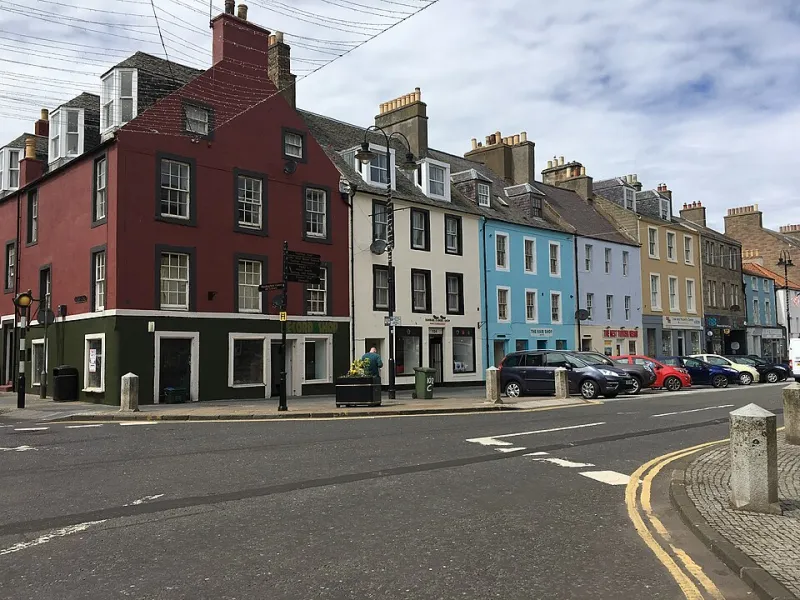
A Library of Useful Things: Testing Shared Equipment in Dunbar
Photo: Learnmore Nyoni, CC0, via Wikimedia Commons
Dunbar is a town of practical people with limited storage. Flats, terraced houses and small gardens do not easily accommodate a ladder, a pressure washer, a gazebo, a folding table or a set of garden tools that are used twice a year. Yet many households buy these items anyway, because borrowing is ad hoc and uncertain. A community equipment library would formalise the obvious: some things are better shared.
This is an opinion piece, but it is not a wish list. The idea is attractive precisely because it sounds simple. It is also the kind of simple idea that can fail quickly if insurance, storage, maintenance and governance are treated as afterthoughts. Dunbar Neighbourhood Hub should be willing to test a pilot, but only a modest and well-bounded one.
The case for a shared store cupboard
The benefits fall into four groups. The first is cost. A household that needs a drill for one shelf, or a gazebo for one birthday, does not need to own either. The second is space. Sharing moves bulky items out of cupboards and sheds and into a managed store. The third is sustainability. A well-maintained tool that is borrowed twenty times displaces twenty purchases. The fourth is social. A library of things creates a reason for neighbours to meet, swap skills and ask for help.
Dunbar already has a strong tradition of informal borrowing. The pilot would not invent that culture; it would give it an address, a catalogue and a set of rules. That matters for people who do not have a neighbour with a ladder, or who would rather not ask.
The questions that cannot be skipped
Insurance is the first. Public liability cover is essential, and the policy must be clear about borrowed equipment, volunteer activity and any electrical items. Loan agreements should set out responsibility for damage, cleaning and return. Age limits and household membership need to be defined. Electrical equipment requires PAT testing and a record of inspection. Ladders and steps need checking before each loan. Mobility aids raise additional questions about hygiene, assessment and suitability.
Storage is the second. A damp shed is not good enough for tools, textiles or mobility equipment. The pilot would need a secure, dry, accessible space with shelving, a signing-in desk and room for returns. That space may be more difficult to find than the equipment itself.
Volunteering is the third. A library of things is not self-running. Someone must manage the catalogue, answer queries, check items in and out, carry out basic maintenance and cover opening sessions. Volunteers need training, supervision and expenses. Governance is the fourth. The Hub could act as accountable body, but the pilot would still need policies on safeguarding, data protection, complaints, asset disposal and financial controls. A charitable structure may be appropriate later; it is not necessary on day one.
A realistic pilot model
A sensible pilot would run for twelve months and start with no more than 100 to 150 items. The initial scope should be tools, gardening equipment, event supplies and occasional household items: drills, sanders, ladders, pressure washers, gazebos, folding tables, chairs, crockery, cool boxes and garden hand tools. Mobility aids should be handled separately, through a referral arrangement with health or social care partners, rather than as a general borrowing category. That protects both borrowers and the pilot.
Access could be two Saturday mornings and one weekday evening per month, staffed by a rota of trained volunteers with a paid coordinator overseeing the whole. A simple online catalogue and reservation form would reduce pressure on opening hours. Membership might be £10 a year, with a refundable deposit for higher-value items and a pay-what-you-can option for people on low incomes. A referral route could waive fees for households in financial hardship.
Success should be measured before the pilot is extended. Useful indicators include the number of loans, repeat borrowers, items repaired, volunteer hours, incidents, insurance claims and user satisfaction. A decision point at nine months would allow the Hub to stop, adjust or seek partners for a permanent home.
Our view
Dunbar does not need a grand building full of donated clutter. It needs a small, well-run pilot with clear boundaries, proper insurance and enough volunteer capacity to keep the shelves in order. If it works, it could become a genuinely useful piece of neighbourhood infrastructure. If it does not, the town will have learned something at modest cost.
The Hub would like to hear from residents who have storage space, tools to lend, volunteer time or experience of running similar schemes. A borrowed neighbourhood is not built by wishful thinking. It is built by careful, boring administration and a willingness to start small.