The Hours That Do Not Fit: Dunbar’s Service Access Audit for 2026
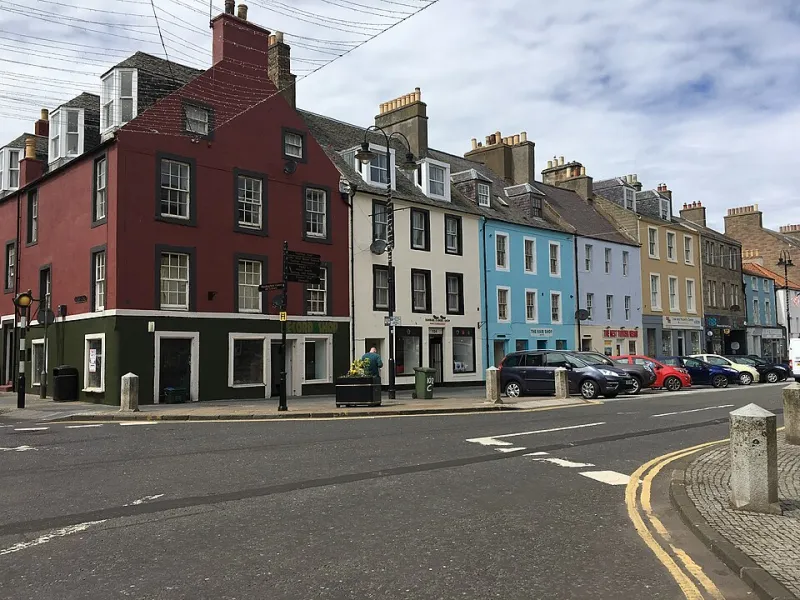
Photo: Jennifer Petrie , CC BY-SA 2.0, via Wikimedia Commons
Dunbar’s everyday services are, by and large, designed around a conventional working week. The pharmacy, library, council office, post office and GP surgery each keep hours that make sense on paper. Yet the town’s residents do not all live on that timetable. Commuters leave before the shutters go up and return after they come down. Shift workers sleep through the middle of the day. Carers fit errands around appointments, medication and school runs. For anyone in those groups, access is not simply a question of whether a service exists. It is a question of whether it exists at the hour when it is needed.
This audit is intended as a practical starting point, not a verdict on any individual provider. Opening times change, and readers should always confirm current details before travelling. What follows is an indicative map of where Dunbar’s service hours sit, where they rub against real-life routines, and where modest adjustments might produce disproportionate benefits.
Why the edges of the day matter
A service that opens from nine to five is open for eight hours. For a commuter on the Edinburgh line, it may be effectively open for zero. The same is true for a parent who cannot leave the house before the school run, or an older resident who relies on a lift. Access has a geography as well as a timetable: a short walk from the High Street is not short if mobility is limited, and a bus that runs hourly can turn a ten-minute errand into an afternoon.
The Hub is interested in these hidden hours because they shape whether people can use services without taking leave, paying for childcare or asking a neighbour for a favour. Small differences in opening times can therefore have a larger effect than grand statements about service availability.
The indicative access picture
The table below summarises common opening patterns for five everyday services in and around Dunbar. It is deliberately broad. Individual pharmacies, libraries and surgeries may differ, and some services operate appointment-only sessions within their published hours.
| Service | Typical core access | Points of friction | Groups most affected |
|---|---|---|---|
| Pharmacy | Weekday daytime, often with a Saturday morning session; some lunchtime closures | After 5.30pm, Saturday afternoon and Sunday; lunchtime queues | Commuters, shift workers, people collecting repeat prescriptions for others |
| Library | Weekday daytime and Saturday morning, with limited later opening | Evenings after 6pm; Sunday and some mornings | Workers, students, older residents who prefer quieter hours |
| Council office | Weekday office hours, with some services by appointment | No evening or weekend access; telephone queues | Carers, commuters, people without reliable internet |
| Post office | Weekday daytime and Saturday morning | Saturday afternoon, after-work collection, lunchtime queues | Workers, small businesses, people sending parcels |
| GP surgery | Weekday daytime, usually from early morning to early evening | Appointment times during work hours; 8am phone lines; limited extended hours | Shift workers, carers, parents, people without transport |
The pattern is familiar, but the cumulative effect is not trivial. A resident who works conventional hours may be able to use the post office in a lunch break, but not the council office if it requires an appointment. A shift worker may find the pharmacy open on the way home but the library closed. A carer may be able to make a phone call at 8am, but not hold for twenty minutes.
Three mismatches that stand out
The first is the after-work gap. The period between 5.30pm and 7pm is when many commuters return to Dunbar and when many errands would naturally be done. It is also when several services are closing or already closed. Even one later evening a week at the library, or a pharmacy counter open beyond the standard close, would change the practical arithmetic for a meaningful number of households.
The second is Saturday afternoon. Saturday morning is the busiest window for people who work weekdays, but it is also when queues are longest and when carers may have competing responsibilities. Extending a single Saturday service, or staggering Saturday opening across providers, could spread demand rather than simply adding capacity.
The third is the telephone and appointment bottleneck. Access is not only about doors. A GP surgery that requires an 8am call, or a council service that requires an online appointment, can exclude people who are perfectly able to attend in person. The Hub would welcome clearer information about which tasks can be completed without a phone, which require an appointment, and which can be handled by a named contact.
Where small changes could do the most good
There is no single fix. But the audit points to a few low-cost possibilities worth discussing with providers. One is a monthly late-opening slot in the library, paired with a warm space and public computers. Another is a pharmacy lunchtime cover arrangement, or clearer signage about when the counter is closed. A third is a weekly or fortnightly council pop-up in a familiar community venue, focused on forms and referrals rather than complex casework. A fourth is better public information about GP online consultation and repeat prescription collection.
None of these ideas is a substitute for properly funded services. They are, however, the kind of adjustments that can be tested without rebuilding a whole system. The question is not whether every service should open until 8pm. It is whether the current pattern is the best fit for the town’s actual rhythms.
Help us build a clearer picture
The Hub is inviting readers to report service access gaps they have experienced in Dunbar. Useful details include the service, the day and time, whether the issue was opening hours, telephone access, appointment availability or transport, and who was affected. Please do not include personal medical details or information about another person without their consent.
Reports can be sent through the contact details on dnh.org.uk. The Hub will aggregate responses and use them to identify where small changes would make the biggest difference. Individual reports will not be published. The aim is a more accurate, shared picture of the hours that do not fit, and a practical conversation about what might be done next.