Beyond the Usual Room: Who Dunbar’s Public Meetings Leave Out
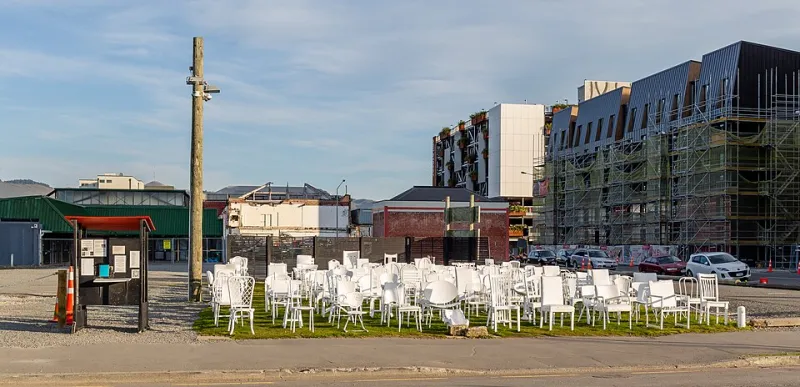
Photo: Michal Klajban, CC BY-SA 4.0, via Wikimedia Commons
Public meetings are often treated as the default instrument of local democracy: book a room, publish a notice, invite the town, and assume the agenda will take care of itself. In Dunbar, as elsewhere in East Lothian, that model still has value. It brings residents face to face with decision-makers, allows concerns to be aired in public, and creates a record of what was said. Yet the familiar pattern—the same councillors, the same community stalwarts, the same handful of residents—should prompt a question rather than a shrug. Who is not in the room, and why?
The comfortable room and its blind spots
The people who attend public meetings are often those with the time, confidence and transport to do so. They may be retired, already networked, or comfortable speaking in front of an audience. That does not make their contribution less valid. It does mean that a meeting can be representative in name only. A parent on a zero-hours contract, a carer who cannot leave the house, a shift worker, a young person without a car, or someone who finds formal rooms intimidating may all have direct experience of the issue under discussion—and no practical route to share it.
Some barriers are structural. Evening meetings can exclude those who work late or care for children. Venues without step-free access, hearing loops or clear signage exclude disabled residents. A long agenda with complex papers can exclude people who process information differently or who do not have the confidence to speak in a large group. Other barriers are cultural. Jargon, procedural rules and the expectation of a polished public statement can make an ordinary resident feel like an intruder. When people say that meetings are not for them, they are often describing a rational response to a format that was not designed with them in mind.
Four formats worth testing
The answer is not to abandon the public meeting. It is to stop treating one format as the only way to participate. Groups in Dunbar could test a small number of alternatives, ideally over a defined period, and record who takes part.
Drop-in surgeries offer a less pressured setting. Instead of a single evening event, an organisation could hold a two-hour session in a library, community centre or high street venue, with no fixed start time and no expectation that visitors stay for the whole session. Short, focused conversations can be more accessible than a formal question-and-answer session, particularly for people who dislike public speaking.
Written-only contributions are another practical option. Not everyone can attend, but many people can send a short email, complete a form, leave a voicemail or write a note. If an organisation genuinely wants written evidence, it should say so clearly, provide a freepost or online route, and publish a summary of what was received. This is not a second-class form of participation; it is a different one.
Rotating times matter more than many organisers assume. A single 7pm slot will always suit some people and exclude others. Alternating between daytime, early evening and weekend sessions—or holding one meeting and one drop-in at different times—widens the chance that people with different routines can take part. Advertise the pattern in advance and keep it stable, so that people can plan.
Paid childcare is a direct test of intent. If an organisation says it wants parents to attend, it should consider whether the cost of a crèche or childcare worker is a reasonable part of the meeting budget. This need not be elaborate. A supervised room with age-appropriate activities, booked through a local provider and advertised clearly, can turn a theoretical invitation into a practical one.
The empty chair checklist
Before scheduling a public meeting in Dunbar, groups could use a simple checklist. It is not a compliance exercise. It is a way of asking, in advance, who the format is likely to exclude.
- Is the venue step-free, warm, well-lit and easy to find?
- Are meeting times rotated across the year, or fixed in a way that only suits one group?
- Is there a written route for people who cannot or will not attend?
- Is childcare available, or is the cost of caring responsibilities explicitly considered?
- Are papers short, plain and available in good time?
- Is there a hearing loop, and is it working?
- Will someone meet first-time attendees at the door?
- Is the agenda explained in plain language, with jargon removed?
- Will the meeting record not just decisions but who was absent and why?
- Is there a follow-up route for people who contribute later?
The chair is a useful symbol because it is visible. An empty chair can mean that someone chose not to come. It can also mean that the invitation was never realistic. The distinction matters. Organisations that monitor attendance without asking why people stay away may mistake compliance for legitimacy.
A modest standard for 2026
Dunbar does not need a grand redesign of public participation. It needs a more honest account of what its meetings are for, and a willingness to test small changes. A drop-in session in a library, a written evidence route, a rotating timetable and a paid childcare arrangement are not radical ideas. They are practical adjustments that signal whether an organisation is inviting the public or merely announcing itself.
The empty chair test is simple: look at the room, name who is missing, and change one thing that would make it easier for them to take part. If groups can do that in 2026, public meetings in Dunbar will be more than a ritual. They will be a working part of local democracy.