The Circuit at the Kerbside: A Practical Guide to Dunbar’s Visiting Services

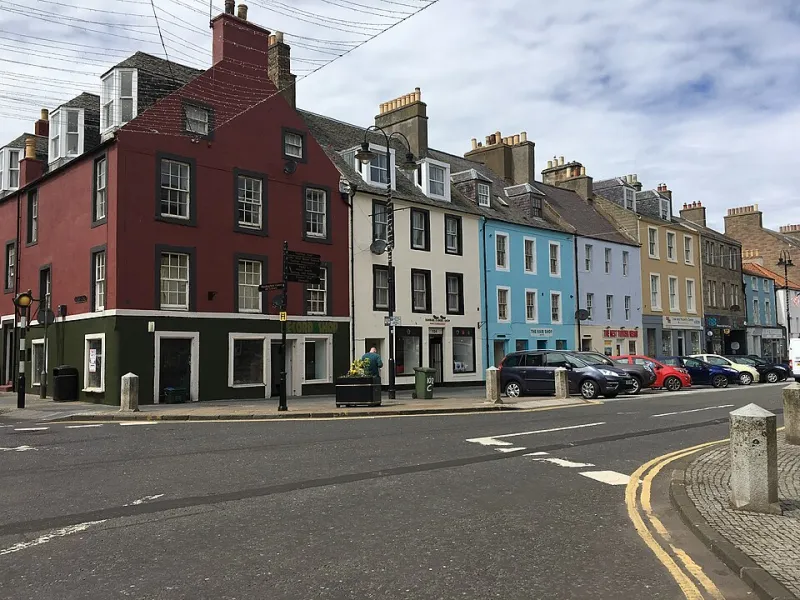
Photo: Altairisfar, Public domain, via Wikimedia Commons
For some Dunbar households, the most important branch is the one that arrives at the kerb. A mobile library, a banking support van or a pop-up advice session can remove a journey, a fare or a difficult bus connection. The value of that circuit is not sentimental. It is practical infrastructure, and it deserves to be read as such.
This guide maps the kinds of visiting services that serve Dunbar and the surrounding streets, explains what each can usually help with, and sets out what residents should bring. It also asks a public-service question that a timetable alone cannot answer: is the circuit reaching the households that need it most? Schedules and stops change, so residents should confirm details with the operator, Dunbar Library, local noticeboards or Dunbar Neighbourhood Hub before travelling.
Why a visiting service is not a lesser service
A mobile service is often described as an outreach extra. In practice, it is a fixed point of access that happens to move. For older residents, people without a car, shift workers and households managing several appointments, the difference between a town-centre counter and a stop five minutes from home can decide whether help is taken up at all.
Three tests matter. First, reach: is the stop within a reasonable walk, with a safe crossing and somewhere to wait? Second, reliability: does the van arrive when published, and is a cancellation communicated? Third, connection: does the visit lead to follow-up, or does it leave the resident with a leaflet and another journey to make? A circuit that fails the third test is visible but not yet joined up.
Libraries that travel
Mobile library stops are the most familiar part of the circuit. They can usually issue and return books, manage reservations, offer access to audiobooks and large-print stock, and provide basic help with online library services. Staff can also point residents towards the home library service where mobility makes a stop difficult to use.
Bring a library card if you have one, a list of titles or subjects you want, and any returns. If you use a hearing aid or need assistance boarding, say so when you arrive. Ask whether the stop has shelter and seating; if it does not, that is a gap worth reporting. A cancelled stop should be logged with the library service and, where relevant, the community council.
Money and banking at the kerbside
Banking support visits are more limited than a high-street branch, but they can still help with account queries, card problems, payment issues and concerns about fraud. Some visits are advice-led rather than transactional, so residents should not assume that every counter service is available.
Bring identification, your bank card, relevant letters and a note of any reference numbers. Never share a PIN or a full password at a pop-up. If you are acting for someone else, ask in advance what evidence of permission is required, such as a power of attorney or deputyship document. For cash access, ask the operator what is available locally rather than making a journey on assumption.
Repair cafés and practical pop-ups
Repair cafés are not always vans, but they belong on the same circuit because they bring practical help to a local hall or church. Typical items include small electricals, clothing, bicycles and simple furniture repairs. Volunteers are usually clear about what they can and cannot make safe; microwaves and items with damaged mains wiring may be excluded.
Bring the item, its charger or missing parts, and a short note of the fault. Expect to stay with the item and to learn from the repair rather than simply hand it over. A repair café is not a guarantee of a fix, but it is a useful test of whether a local repair culture can reduce waste and cost.
Advice visits: the paperwork that unlocks help
Advice pop-ups can cover welfare benefits, housing, energy bills, employment and consumer problems. They are often the first door rather than the whole answer. The most useful visit is one where the adviser can identify the right form, deadline or referral.
Bring correspondence, identification, evidence of income and any reference numbers. A written list of questions is more effective than a carrier bag of unopened letters. Ask for a written record of what was discussed and what happens next. If the issue needs a specialist appointment, ask how the referral is made and who will contact you.
Health and wellbeing stops
Vaccination sessions, blood pressure checks and wellbeing pop-ups are sometimes part of the same visiting pattern. Bring a medication list, your NHS number if you have it, and any concerns you want to raise. Privacy can be limited in a public hall or van, so ask whether a quiet space is available for a sensitive conversation.
Reading the circuit map
A useful way to understand the circuit is to think in three rings. The town-centre anchor stops are the most frequent and usually sit near Dunbar Library or a community building. Edge-of-town estates and sheltered housing sites tend to receive fewer visits. Surrounding streets and nearby villages may see monthly or occasional stops. Published timetables should state the day, time, location and any access notes. Where they do not, residents should ask for that information in plain language.
Arrive early enough to be seen, but do not assume that an early arrival guarantees a place. Ask the operator whether a booking is needed. Check whether the stop has level access, lighting and a waiting area. A service that is technically present but practically inaccessible has not fully arrived.
What to bring: a short checklist
Bring a library card or identification, relevant letters, a medication list, reference numbers, proof of address where needed, and a note of questions. Carry only the documents required; do not bring unnecessary financial information to a public pop-up. If you are helping a neighbour or relative, make sure you have the permission and paperwork needed to discuss their affairs.
Flagging gaps
Residents should report missed stops, inaccessible locations and services that turn people away without a referral. Operators need that information, and so do community councils and local elected representatives. Gaps are not only about distance. They include poor lighting, a stop that clashes with caring responsibilities, a van with a step that cannot be used, or a timetable published only online.
The test for 2026 is whether Dunbar’s mobile circuit is treated as a joined-up service rather than a series of separate visits. That means published routes, protected stops, clear referral pathways and a simple way for residents to say when the circuit is not reaching them. A van that knows the town is useful. A circuit that knows who is missing is better.