Beside the Screen: Who Sits With You When Dunbar Goes Online
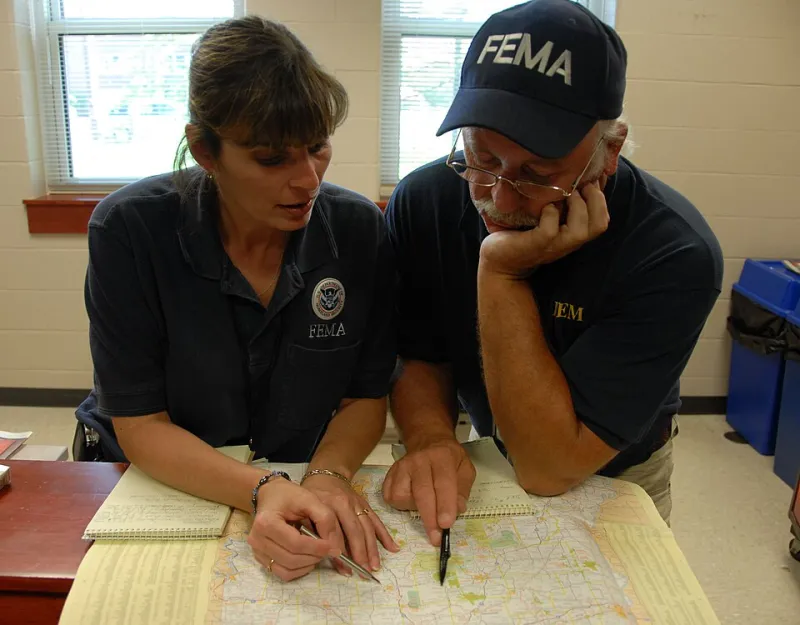
Photo: John Shea, Public domain, via Wikimedia Commons
A household in Dunbar can now conduct most of its business with the council, the health service, the energy supplier and the tax office without leaving the kitchen table. In principle that is an improvement. In practice it has moved a piece of everyday administration onto residents who may not have a working device, a reliable connection, an email address they can still get into, or the confidence to press the button marked submit.
Online access is often described as a doorstep — something a person arrives at once and is then inside. For many people it is closer to a corridor with several doors, and someone has to know which one opens.
The gap is rarely the cable
Dunbar is not poorly served for connectivity. What keeps people out of online services is more often the second half of the job: a password that has stopped working, a verification text that never arrives, a form asking for a reference number nobody kept. These are small problems with a large effect, and they are solved fastest by a person sitting alongside rather than by a leaflet.
This is why the useful question to put to a neighbour is not whether they have the internet, but whether there is something they have been putting off.
Four front doors worth knowing
Dunbar Library, Bleachingfield Centre. The library remains the most dependable entry point in town. Public computers and free Wi-Fi are available without an appointment, staff can help with printing, scanning and the early steps of an online form, and the building is warm, staffed and on a bus route. Opening hours shift through the year, so check before sending anyone along.
East Lothian Council customer services. For council tax reduction, housing enquiries, blue badges and school place applications, the council's own staff are the correct door. Many of these processes now default to an online form; staff can advise on alternatives and on what evidence a claim needs before it is begun.
Advice services. Citizens Advice and local welfare rights workers handle the applications where a mistake is expensive — Universal Credit, disability benefits, and the mandatory reconsiderations that follow a refusal. These are almost entirely digital processes now, and an adviser who has completed a hundred of them is worth an hour of anybody's afternoon.
Housing associations and community groups. Several local landlords and voluntary organisations run small digital inclusion sessions, and some operate device lending — tablets or laptops borrowed for a fixed period, occasionally with a data allowance attached. Provision changes, so a telephone call is better than an assumption.
Matching the person to the door
The library suits someone who needs a task finished with a bit of guidance. Advice services suit someone whose application may be contested. The council suits anything carrying the council's name. Device lending suits a household that cannot justify a purchase but must file something monthly. None of these substitutes for the others, and sending someone to the wrong one spends the goodwill that got them there.
Handing a neighbour over well
Referral is a small skill worth practising.
Ask before acting. Offering to sort it out can remove a task from the person who needs to understand it.
Name the task rather than the technology. 'You need to renew your bus pass' travels further than 'you need to get online'.
Write down the door, the address and the telephone number, and say whether an appointment is needed. A referral that ends at a closed door is worse than no referral at all.
Offer to go the first time, then step back. The aim is a person who can manage it again in six months.
Never hold somebody else's passwords, and never ask for a one-time code. Explain the reason: those codes exist precisely to stop other people getting in.
The scams that arrive with the confidence
Anyone new to online services will meet fraud quickly. The current patterns are familiar: parcel messages demanding a redelivery fee, texts announcing a council tax rebate or a cost of living payment, calls from someone claiming to be from a bank's fraud team. The rule worth passing on is short — no legitimate organisation asks for a full password or a security code by message, and anything urgent should be checked against a number you have looked up yourself.
Suspicious texts can be forwarded free of charge to 7726. Advice Direct Scotland runs a consumer helpline, and Police Scotland takes reports on 101.
Not everything requires a screen
It is worth saying plainly that paper routes and telephone lines still exist, and that services have a duty to make reasonable adjustments. Asking for a form by post, or for a callback at a stated time, is not an imposition. It is a request the organisation ought to expect and should be able to meet.
Infrastructure with a face
A town's digital access is now as much a piece of public infrastructure as its bus timetable or its noticeboards, and like those it functions because a handful of people know where the doors are and are willing to say so. Dunbar already has the doors. What remains is the quieter, more human task: making sure the neighbour who has been putting something off knows which one to knock on.