High Street Helping Hands: Dunbar’s Second-Hand Shops as Service Contacts
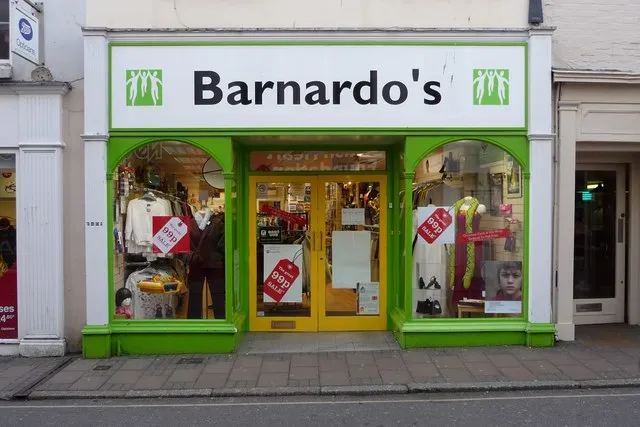
Photo: Roger A Smith , CC BY-SA 2.0, via Wikimedia Commons
The charity shop is easy to misread. On the surface it is a shop selling donated goods at low prices. In practice, it is also a meeting point, a volunteering pathway and an informal advice desk. In Dunbar, the cluster of charity shops along the High Street and nearby streets forms a circuit that many households use long before they approach a public service. This feature maps that circuit and asks what statutory services could learn from it.
More than a shop
Charity shops sit on the high street because that is where people are. They are warm, open without appointment and usually free to enter. A parent can buy school clothes at a fraction of the retail price. An older person can find a jigsaw and a conversation. Someone who has just moved into a flat can furnish it over a few weeks. The low price is the headline, but the low threshold is the deeper service. There is no form at the door and no means test at the till.
The circuit
Dunbar’s second-hand economy is not one shop but a circuit. National charity retailers, local church-run shops and occasional pop-up sales each serve a slightly different purpose. Some are strong on clothing, others on books, furniture or household goods. Donation drop-offs, volunteer rotas and collection arrangements link them to households across the town and surrounding villages. The circuit is informal, but it is not random. People learn which shop takes what, which one is good for children’s clothes and which one will collect a sofa. That knowledge is a form of local intelligence.
Donations: what actually happens
Donations are the raw material. Most shops ask that goods are clean, complete and in a condition they can sell. Electrical items need safety checks; furniture may need fire labels. Shops can refuse items they cannot sell, and they are not being ungrateful when they do. The cost of disposal is real. A useful rule is to ask before you load the car. If you are donating after a bereavement or a house move, ask whether the shop can collect and whether there is a waiting list. Keep a receipt if you need one for Gift Aid or for your own records.
Volunteering: a route in
Charity shops are also one of the most accessible volunteering routes in the town. Roles include sorting, steaming, pricing, window displays, till work and back-office tasks. Most shops offer a trial shift and ask for references for some roles. The time commitment can be a few hours a week. For someone who has been out of work, recently retired or new to the area, a shop can provide routine, references and a sense of usefulness. It can also be a stepping stone to paid work. That is a public benefit that does not appear in the sales figures.
The informal advice desk
Staff and volunteers are often asked questions that have nothing to do with shopping. Where can I get help with my energy bill? Who do I ring about housing? Is there a food bank? These are not formal advice sessions, and they should not become them. But a charity shop can be a trusted signposting point. The best response is a small, accurate list of local contacts, kept up to date, and a rule that volunteers do not give advice beyond their knowledge. A shop that knows its limits is more useful than one that guesses.
What public services could learn
There are four lessons. First, trust is built by repetition. A shop that opens at the same time every day and treats people with courtesy becomes familiar. Second, low stigma matters. Many people will accept help in a shop who would not walk into a council office. Third, informal contact can identify need early, but only if there is somewhere to refer. Fourth, local knowledge is an asset. Shop managers know which families are struggling, which donations are needed and which volunteers are reliable. Public services rarely ask them.
The limits of the circuit
None of this means charity shops should replace advice services, food banks or housing support. They are businesses with charitable purposes, and their first duty is to raise funds. Volunteers are not trained caseworkers. Confidentiality is not the same as in a clinical setting. There is also a risk that public services download their responsibilities onto good neighbours. The circuit works because it is voluntary. If it becomes an expected part of the safety net, it may break.
A practical way forward
A modest partnership would start with a shared signposting card, updated each season and distributed to shops, libraries and community centres. It could include a short briefing for shop managers on local services and a named contact for referrals. It could invite shops to share what they are seeing, without breaching confidentiality. And it could recognise volunteering as a route to wellbeing, not just a free labour pool.
The charity shop circuit is not a public service. It is something more ordinary and more durable: a set of trusted high-street contacts that many people use every week. Public services in Dunbar should not romanticise it, but they should stop ignoring it. A town that understands its second-hand economy understands a good deal about how its residents actually live.