When the Phone Is the First Door: A 2026 Telephone Access Review for Dunbar
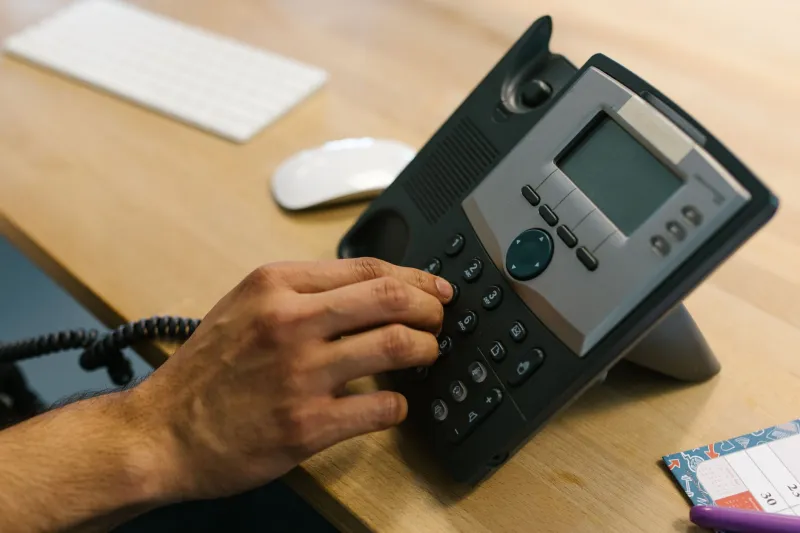
Telephone contact is often treated as a legacy channel: useful, but secondary to websites and online forms. For many households in Dunbar, however, the phone remains the first door they try. Older residents, people with limited data, those in shared or temporary accommodation, and anyone who needs a quick answer before travelling all rely on a human voice at the other end. When that voice does not arrive, the effect is not neutral. It becomes another barrier in a sequence of barriers.
Why the telephone still matters
Dunbar is a town of short distances but uneven access. The High Street, the Bleachingfield Centre, the library and the railway station are all within reach for some residents, but not everyone can travel at short notice. A phone call can establish whether a service is open, whether an appointment is needed, or whether a document must be brought in person. It can save a journey. It can also prevent a wasted one.
The telephone is therefore not a backup to digital services. It is part of the local service infrastructure. If a published number rings out, or a call-back is promised and not made, the resident is left to decide whether to keep trying, travel without confirmation, or give up. That decision is an access issue, not a matter of patience.
How the audit worked
During October 2026, Dunbar Neighbourhood Hub carried out a small, non-statistical telephone audit. We made a series of test calls to a sample of publicly listed local numbers covering community services, health reception, housing enquiries, advice lines, community transport and local authority contacts. Calls were made at different times of day and on different weekdays.
For each call, we kept a simple ledger: the number, date and time, the number of menu steps, the time taken to reach a person, whether a call-back was offered, the timeframe promised, whether the call-back arrived, and what alternative channel was given if the call was not answered. We did not record personal details or individual staff names. The aim was not to produce a league table of organisations, but to examine the design of telephone access as a whole.
What the calls showed
Hold times and queue messages
Experiences varied widely. Some numbers were answered within two minutes. Others kept us on hold for twelve, fifteen or twenty minutes. The more difficult calls were not necessarily the longest; they were the ones where the queue message gave no indication of position or expected wait. A repeating piece of music, without a periodic update, encourages callers to hang up and redial, which adds to the load on the line.
Call-back promises
Call-back offers were inconsistent. Some services offered a call-back before we asked. Some offered one only when prompted. Others said simply that someone would ring back, without stating when. Where a timeframe was given, it was not always met. The ledger showed a gap between the promise and the outcome. A call-back is not a courtesy; it is a commitment. If it is made, it should be recorded and kept, or the caller should be told why it cannot be.
Unanswered lines and voicemail
Several numbers rang out or went to a generic voicemail message. In some cases the mailbox was full. In others the message gave opening hours but no alternative number or email address. These are dead ends in the truest sense: the caller has done what the organisation asked, and has no clear next step. Published numbers need to be checked as regularly as web pages, and voicemail messages should always say what to do next.
Workarounds residents use
The audit also highlighted the informal strategies people adopt. Callers learn to ring at opening time, to redial repeatedly, to ask a friend or relative to try a different number, or to visit in person without an appointment. Some keep their own paper record of calls and promises. These are reasonable coping strategies, but they are not a substitute for a working telephone system. They place the burden on the resident and can exclude anyone without the time, confidence or support to persist.
Five practical fixes
-
Publish a call handling standard. State the target time to answer, the maximum expected queue, and the timeframe within which a call-back will be made. A short public statement is better than an unpublished aspiration.
-
Treat call-backs as tracked work. Give each call-back a reference, record the promised date and time, and review any that are missed. The ledger can be a simple spreadsheet; the important part is that it is used.
-
Keep the first menu short. Where a recorded menu is necessary, offer a direct route to a person early. A caller who is unsure which option to choose should not be trapped in a loop.
-
Maintain numbers and voicemail. Remove dead numbers from websites and leaflets. Make sure voicemail messages state opening hours, alternative contact details and what to do in an emergency. Check mailboxes so they do not fill up.
-
Review missed calls weekly. A missed call is information. Services can use call logs to identify peak times, recurring questions and points where callers abandon the queue. That evidence should inform staffing and message design.
A public ledger for telephone access
One useful step would be a shared telephone access ledger, kept internally by each service and summarised publicly each quarter. The columns need not be complicated: date, number called, time to answer, call-back offered, call-back kept, outcome, and alternative channel given. No personal data is required. Over time, the ledger would show whether access is improving or slipping, and it would give community organisations a common language for discussing the problem.
This is not about naming and shaming. It is about making the invisible visible. Telephone access is often managed through anecdote: a resident says they could not get through, and a service says that is unusual. A simple ledger turns anecdote into management information.
What residents can do
Residents can help by noting the time and number they called, asking for a call-back reference where one is offered, and keeping a short record of what was promised. Where a call is not answered, an email or in-person visit may provide a parallel route, though it should not be the only route. Repeated failures are worth sharing with local representatives, community groups or Dunbar Neighbourhood Hub so that patterns can be identified.
Ultimately, however, the responsibility lies with services. Residents should not have to become auditors of the telephone system. They should be able to expect that a published number leads somewhere useful.
A front door that ends in help
A telephone front door is not measured by whether it rings. It is measured by whether the person who calls reaches a route that ends in help. In 2026, that means clear standards, honest queue messages, call-backs that are kept, voicemail that points somewhere else, and alternatives for those who cannot use the phone at all. Dunbar's services are delivered by people who care about the town. The task is to design the line so that care is reachable, not just intended.